Image
Image

Shea Nuts (Organic - Cosmetic Use Only - Sterile)

$5.05
$19.99
From $0.46/mo or 0% APR with
You are saving
75%
($14.94)
Sale
select number of bags:
1

Real Shea Nuts. Wild Grown. Hand Harvested in Ghana.

This is where shea butter begins. Each bag of Baraka Shea Nuts contains approximately 20 genuine, hand-harvested shea nuts from wild-grown shea trees in Northern Ghana — the actual seeds from which all shea butter is made. Seldom available in retail or wholesale markets, these nuts offer a rare and tangible glimpse into the origin of one of the world's most valued skincare ingredients. Whether you are a retailer wanting to educate customers at the point of sale, an educator teaching about African botanical ingredients, or someone simply curious to see and hold the source of shea butter — this is the starting point of the entire shea butter story. Please note: these nuts are sterile and will not grow. They are for educational, display, and cosmetic use only.

Quick Specs:

  • Contents: Approximately 20 shea nuts per bag
  • Certification: Organic
  • Origin: Northern Ghana, West Africa — wild-grown shea trees
  • Harvesting: Hand-harvested by women's cooperatives
  • Designation: Cosmetic use only — sterile, will not grow
  • Sizes Available: 1 bag · 2 bags · 3 bags (bundle savings on 2 and 3 bag orders)
  • Best For: Retail education, trade shows, classroom teaching, personal curiosity, display

Perfect For:

  • Retailers and skincare brands who want to show customers where shea butter comes from
  • Trade show and in-store displays — a hands-on conversation starter about natural skincare ingredients
  • Educators and students learning about African botanical ingredients and fair trade supply chains
  • Anyone curious to see, hold, and understand the origin of one of the world's most cherished botanical skincare ingredients
  • Brand storytelling — connecting customers to the human and agricultural story behind shea butter
  • Nuts N' Beans collectors and natural ingredient enthusiasts

Key Takeaways:

  • Genuine, hand-harvested shea nuts from wild-grown trees in Northern Ghana — approximately 20 per bag
  • One of the rarest raw materials available in retail — seldom found outside Ghana's producing communities
  • A tangible bridge between raw material and finished skincare product — the beginning of all shea butter
  • Every order supports the women of the Konjeihi Women's Enterprise Centre in Ghana who harvest and process these nuts

Order now and support the women of the Konjeihi Women's Enterprise Centre in Ghana

Handmade by Women in Ghana
Trusted by 17,000+ Customers
Pure • Unrefined • Lab Tested

What Are Baraka Shea Nuts Good For?

The quick answer: Baraka Shea Nuts are the actual seeds from which shea butter is made — hand-harvested from wild-grown shea trees in Northern Ghana by women's cooperatives. Sterile and intended for educational, display, and cosmetic use only. They are one of the rarest raw materials available outside of Ghana's producing regions — a genuine and tangible connection to the origin of shea butter that no photograph or description can replicate.

The Story Behind the Nut

Shea butter begins its journey as the seed inside the fruit of the wild shea tree — a species that grows naturally across the savanna parklands of West Africa and cannot be commercially cultivated. Every shea nut in this bag was gathered by hand from beneath wild shea trees in Northern Ghana — the same trees, the same harvest, the same traditional process that has produced shea butter for generations. The nut is cracked, dried, roasted, and ground to produce the shea butter in Baraka's skincare products. Holding one of these nuts is holding the origin of that entire journey.

Who Uses Shea Nuts — and How

Who You AreHow You Use Them
Skincare RetailersDisplay in-store alongside shea butter products to show customers the physical origin of what they are buying — a powerful point-of-sale storytelling tool
Wholesale BrandsUse at trade shows, brand events, and buyer meetings to demonstrate your supply chain transparency and the authentic origins of your shea ingredients
Educators and TeachersUse as a hands-on teaching material for lessons on African agriculture, fair trade supply chains, botanical ingredients, and natural skincare
Curious ConsumersExperience the actual seed behind the shea butter in your skincare products — a rare opportunity to see and hold an ingredient that almost never reaches retail markets
Natural Ingredient EnthusiastsAdd to a collection of raw botanical materials — shea nuts are among the rarest natural skincare ingredients available in retail form anywhere in the world
Fair Trade AdvocatesUse as a conversation piece about the women who harvest these nuts — connecting the physical object to the human story of fair trade shea production in Ghana

What Makes Baraka Shea Nuts Rare

  • Wild-grown only: Shea trees grow naturally and cannot be commercially farmed — every nut comes from a tree that grew without cultivation, in the wild shea parklands of Northern Ghana
  • Hand-harvested: Each nut is gathered individually by women's cooperatives during the seasonal harvest — no mechanised collection, no shortcuts
  • Seldom available: Shea nuts are processed immediately after harvest in Ghana — exporting them in raw form for retail is genuinely uncommon and requires specific handling
  • Certified organic: Baraka's shea nuts carry organic certification — the same standard applied to the shea butter made from them

For more on the shea butter that comes from these nuts, see Shea Butter Benefits: The Complete Guide to What Raw Shea Butter Does for Skin, Hair, and DIY and Decoding Shea Butter: A Guide to Color, Smell and Quality.

Q: What exactly are these shea nuts?
A: These are the actual seeds from which shea butter is made — hand-harvested from wild-grown shea trees in Northern Ghana. Sterile (will not grow) and intended for educational, display, and cosmetic use only. Each bag contains approximately 20 nuts.

How Do You Use Baraka Shea Nuts?

These are for education and display — not for processing at home.

Baraka Shea Nuts are sterile and designated for cosmetic use, educational display, and storytelling purposes only. They are not intended for home processing into shea butter — traditional shea butter production requires specific equipment, community knowledge, and large quantities of fresh nuts. What these nuts are for is showing, explaining, and connecting — bringing the physical origin of shea butter into a retail, educational, or personal context where it can be seen, held, and understood.

Three Ways to Use Them

1. Retail Display and Point-of-Sale Storytelling
Place a bag or a few loose nuts in a small bowl or glass jar alongside your shea butter products in-store. A small handwritten or printed card explaining "This is where shea butter begins — hand-harvested from wild shea trees in Northern Ghana" gives customers a tangible connection to the ingredient in the product they are buying. This kind of physical storytelling builds trust and deepens the customer relationship with natural ingredients.

2. Trade Show and Brand Event Engagement
Shea nuts are an immediate conversation starter at trade shows and brand events. Most buyers and retail partners have never seen or held a shea nut — offering them the chance to do so creates a memorable and distinctive brand moment. Pair with Baraka's shea butter samples and the fair trade sourcing story for a complete origin-to-product narrative.

3. Educational Use — Classroom, Workshop, or Home
For educators, students, and curious individuals: shea nuts are one of the most effective hands-on teaching materials for lessons on African agriculture, botanical skincare ingredients, fair trade supply chains, and women's cooperative economics. Baraka's shea nuts come with the full sourcing story — wild-grown, hand-harvested, from the Konjeihi Women's Enterprise Centre in Northern Ghana.

Display Tips

  • Open display: For retail and events, removing a few nuts from the bag and placing them in a small open dish invites customers to touch and examine them — tactile engagement is key to their educational value
  • Pairing: Display alongside Baraka shea butter, shea oil, or other shea-derived products to complete the origin-to-product story
  • Labelling: A simple label or card noting "Shea Nuts — hand-harvested in Northern Ghana — the origin of shea butter" maximises their storytelling value
  • Storage: Keep in the original bag away from moisture when not on display — they will last indefinitely when stored properly

To learn more about the full journey from shea nut to shea butter, see Shea Butter Benefits: The Complete Guide to What Raw Shea Butter Does for Skin, Hair, and DIY, Fair Trade Shea Butter: The Konjeihi Women's Enterprise Centre Story, and The Konjeihi Women's Enterprise Centre: How Baraka's Cooperative Partnership Works.

Q: Can I make shea butter from these nuts at home?
A: No — these nuts are sterile and designated for educational and display use only. Traditional shea butter production is a skilled, labour-intensive process requiring large quantities of fresh nuts, specific equipment, and generational knowledge. These nuts are for understanding and displaying the origin of shea butter — not for home processing.

How Many Bags of Shea Nuts Should I Order?

Baraka Shea Nuts are available in 1, 2, or 3-bag quantities — with bundle savings on 2 and 3-bag orders. The right quantity depends on how you plan to use them — a single bag is ideal for personal curiosity or a small in-store display, while 2 or 3 bags give retailers and educators enough nuts to use across multiple displays, events, or classroom sessions simultaneously.

Quantity Comparison

QuantityContentsBest For
1 Bag~20 shea nutsPersonal curiosity · single retail display · classroom sample · first-time order
2 Bags~40 shea nutsMultiple displays · trade show use · educator with multiple classrooms · gift pairing
3 Bags~60 shea nutsRetail chains · regular event use · wholesale buyer kits · full storytelling stations

Why Order More Than One Bag?

  • Significant bundle savings: 2 bags saves 37% vs. buying individually; 3 bags saves 50% — the most economical option for regular use
  • Multiple displays: If you have more than one retail location or display station, having extra bags means you never need to rotate a single set of nuts between locations
  • Gift and pairing: A bag of shea nuts paired with Baraka shea butter makes a meaningful, story-rich gift — order 2 or 3 bags to create multiple gift sets
  • Educational events: Teachers and workshop facilitators find that having 40–60 nuts allows every participant to hold their own nut during a session

For larger commercial orders — retail chain quantities, wholesale buyer kits, or event bulk orders — see the Nuts N' Beans collection for the full range of raw botanical display materials, or contact Baraka directly about volume pricing.

Q: What is the difference between 1, 2, and 3 bags?
A: Each bag contains approximately 20 shea nuts. The contents are the same across all quantities — 2 and 3 bag orders offer significant bundle savings (37% and 50% respectively) and provide more nuts for multiple displays, events, or classroom sessions.

Are Shea Nuts Available in Larger Quantities?

The Baraka Shea Nuts product is currently available in 1, 2, and 3-bag quantities through the standard product page — each bag containing approximately 20 hand-harvested shea nuts from Northern Ghana. For trade show quantities, wholesale buyer kit production, or retail chain display needs that exceed the standard 3-bag maximum, contact Baraka directly to discuss volume availability.

What's in the Nuts N' Beans Collection?

Baraka's Nuts N' Beans collection includes shea nuts alongside other raw botanical display materials — providing a complete range of origin-story props for retailers, educators, and brand storytellers working with natural skincare ingredients.

Pairing Suggestions

  • With Shea Butter: A bag of shea nuts alongside Baraka Shea Butter creates a complete origin-to-product display — the nut and the butter made from it, side by side
  • With Cocoa Beans: Pair shea nuts with other Baraka Nuts N' Beans products for a complete West African botanical ingredients display — ideal for trade show storytelling
  • With Fair Trade Story materials: Use alongside printed or digital fair trade sourcing information from the Konjeihi Women's Enterprise Centre Story to create a full educational station

For professional or commercial bulk sourcing of Baraka's shea products, the Wholesale and Bulk Shea Butter: Supply for Soap Makers, Formulators, and Small Manufacturers page has everything you need.

Where Do Baraka Shea Nuts Come From?

These shea nuts begin their journey in the wild shea parklands of Northern Ghana — a vast natural landscape where shea trees have grown without cultivation for thousands of years. The shea tree cannot be farmed commercially; it grows wild, matures slowly over decades, and produces its first significant harvest only after many years of growth. Some of the trees whose nuts are in your bag are over 200 years old. Every nut in this bag was gathered by hand — by members of the Konjeihi Women's Enterprise Centre, who walk through the shea parklands each harvest season collecting fallen shea fruit from beneath the trees they have known their whole lives.

After gathering, the fruit pulp is removed and the nuts are dried using traditional methods before being prepared for processing into shea butter — or, in this case, preserved and packaged for their rarer purpose: allowing people outside Ghana to hold, examine, and understand the physical origin of shea butter. The women of the Konjeihi Women's Enterprise Centre are not just harvesters — they are the keepers of the traditional knowledge that makes Baraka's shea butter what it is. Watch Celebrating Mothers: Felicia Solomon to meet one of the producers whose hands gathered the nuts in your bag.

Every purchase of Baraka Shea Nuts directly supports the women and communities of Northern Ghana who make the entire shea butter supply chain possible. Learn more in Fair Trade Shea Butter: The Konjeihi Women's Enterprise Centre Story and The Konjeihi Women's Enterprise Centre: How Baraka's Cooperative Partnership Works. Read the Baraka Social & Environmental Impact Report to see exactly what your purchase creates.

From their hands to yours — the origin of shea butter, held in your hand.

What's In the Baraka Shea Nuts Bag?

Product Specifications

Contents: Approximately 20 shea nuts per bag

Species: Vitellaria paradoxa (Shea Tree) — the botanical source of shea butter

Certification: Organic

Origin: Northern Ghana, West Africa — wild-grown shea parklands

Harvesting: Hand-harvested by women's cooperatives at the Konjeihi Women's Enterprise Centre

Designation: Cosmetic use only — sterile, will not grow

Preparation: Traditionally prepared and dried

What You'll See

  • Appearance: Brown to dark brown · oval-shaped · approximately 2–3cm in length · hard outer shell encasing the nut kernel
  • Texture: Hard, dense, and smooth on the outer surface · the kernel inside is the source of shea butter fat
  • Scent: Mild, natural earthy aroma — characteristic of dried shea nuts
  • Size variation: Natural variation in size and shape between individual nuts — a sign of wild-grown, non-cultivated origin

From Nut to Butter — The Journey

Each shea nut in this bag represents one step in a remarkable botanical journey. In traditional processing: the nut is cracked open to reveal the kernel · the kernel is dried and roasted · the roasted kernels are ground into a paste · the paste is kneaded with water · the fat rises to the surface · the fat is collected and boiled · the resulting pure fat is cooled into shea butter. This process — done entirely by hand using traditional knowledge — is what produces the shea butter in Baraka's skincare products. Learn more in Shea Butter Benefits: The Complete Guide to What Raw Shea Butter Does for Skin, Hair, and DIY.

Important Notes

  • Sterile: These nuts will not germinate or grow — they are prepared and designated for cosmetic, educational, and display use only
  • Not for consumption: These are not a food product — do not eat
  • Not for home processing: Traditional shea butter production requires large quantities of fresh nuts and specialised equipment — these nuts are not suitable for home shea butter making
  • Cosmetic use only: Any cosmetic application must follow standard cosmetic ingredient safety practices

Storage

  • Store in a cool, dry place away from moisture
  • Keep in original bag or a sealed container when not on display
  • Will last indefinitely when stored properly — dry shea nuts are extremely shelf-stable

Got Questions? We've Got Answers.

Q: What are these shea nuts?
A: These are genuine, organic, hand-harvested shea nuts from wild-grown shea trees in Northern Ghana — the actual seeds from which shea butter is produced. Each bag contains approximately 20 nuts. They are sterile, designated for educational, display, and cosmetic use only, and will not grow.

Q: Why are shea nuts so rare to find?
A: Shea nuts are typically processed immediately after harvest in Ghana into shea butter or shea oil — they are seldom exported in raw nut form. Making them available in retail quantities requires specific handling and is genuinely uncommon anywhere outside of producing regions in West Africa.

Q: Can I make shea butter from these nuts?
A: No. These nuts are sterile and designated for educational and display use only. Traditional shea butter production is a skilled, labour-intensive process requiring large quantities of fresh nuts, specific equipment, and generational knowledge — it is not replicable at home with a small number of dried, sterile nuts.

Q: Will these nuts grow if I plant them?
A: No — these shea nuts are sterile and will not germinate or grow.

Q: Are these safe to handle?
A: Yes — they are safe to handle for display and educational purposes. They are not a food product and should not be consumed.

Q: What is the best way to use these for retail display?
A: Place a few nuts in an open bowl or glass jar alongside your shea butter products. Add a small card explaining their origin — "These are the actual seeds from which shea butter is made, hand-harvested in Northern Ghana." Allowing customers to touch and examine them creates a memorable and trust-building connection to the ingredient.

Q: How many nuts are in each bag?
A: Approximately 20 shea nuts per bag. The 2-bag order contains approximately 40 nuts; the 3-bag order approximately 60 nuts.

Q: How should I store these shea nuts?
A: Store in a cool, dry place away from moisture. Keep in the original bag or a sealed container when not on display. Properly stored dry shea nuts are extremely shelf-stable and will last indefinitely.

Q: Do these support the women in Ghana?
A: Yes. Every order of Baraka Shea Nuts supports the women of the Konjeihi Women's Enterprise Centre in Northern Ghana — the same women who hand-harvest and traditionally process the shea nuts that become Baraka's shea butter. Read more in the Baraka Social & Environmental Impact Report.

Q: Where can I find more raw botanical display materials like this?
A: Browse the full Nuts N' Beans collection for other raw botanical display materials from Baraka's sourcing regions in Ghana.

Buying Shea Nuts (Organic - Cosmetic Use Only - Sterile): Your Questions Answered

What are shea nuts used for?

Baraka Shea Nuts are used for education and display, not for planting, eating or making shea butter at home. Retailers set them beside shea butter at the point of sale, trade show teams use them as a conversation starter, and teachers use them in lessons on African botanical ingredients. They are sterile and designated for cosmetic, educational and display use only.

Where can I buy shea nuts?

Right here. Baraka Shea Nuts come in bags of about 20 wild-grown, hand-harvested shea nuts from Northern Ghana, gathered by the women of the Konjeihi Women's Enterprise Centre and sold for cosmetic, educational and display use only.

Can I plant or eat these shea nuts?

No to both. These shea nuts are sterile and will not germinate or grow, and they are not a food product, so please do not eat them. They are for cosmetic, educational and display use only.

What are shea nuts used for?

Baraka Shea Nuts are used for education and display. Retailers place them beside shea butter at the point of sale, trade show teams use them as a conversation starter, and teachers use them in lessons on African botanical ingredients. Anyone curious can hold the actual seed that shea butter comes from. They are sterile and designated for cosmetic, educational and display use.

What size is the pack?

Each bag holds approximately 20 shea nuts, and each nut is about 0.8 to 1.2 in (2 to 3 cm) long, with natural variation in size and shape. You can order 1 bag, 2 bags (about 40 nuts) or 3 bags (about 60 nuts) on this page. The nuts are the same in every quantity.

Where do they come from?

Baraka Shea Nuts come from wild-grown shea trees in Northern Ghana, West Africa. They are hand-harvested by the women of the Konjeihi Women's Enterprise Centre, who gather the fallen fruit each harvest season. The nuts are then dried using traditional methods and packed in bags of approximately 20 nuts.

Are they for cosmetic use?

Yes. Baraka Shea Nuts are designated for cosmetic use, along with educational and display use. They are sterile, come from wild-grown trees in Northern Ghana, and each bag holds approximately 20 nuts. Any cosmetic use should follow standard cosmetic ingredient safety practices.

Why Choose Baraka

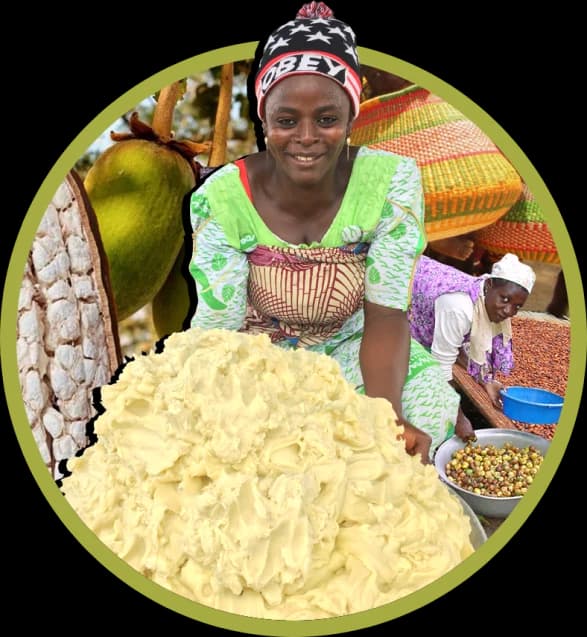
Handcrafted by women in Ghana using age-old techniques passed down through generations. Centuries of practice has taught them how to extract every bit of goodness from the shea nut, and that quality is now passed on in every package of shea butter and all the products made from it.

Shipping & Returns

We ship worldwide from our fulfillment centre in North America. At checkout you can see shipping options and costs. If you would like to arrange your own shipping please select warehouse pickup and send us an email to confirm. We can provide you with shipping and pickup details for your courier of choice. We hope you love your Baraka products. If you are unsatisfied for any reason though, we offer no hassle returns with no time limit, just contact us.

HOW SHEA BUTTER IS MADE

Come with us to the wild shea forests of Ghana to see how the process of making shea butter begins. From there, we’ll explore all the steps involved in crafting raw, unrefined shea butter so that it’s ready for you to use and enjoy.

BARAKA NUTS 'N BEANS

FROM OUR HANDS TO YOURS

All of our products are sustainably sourced and handcrafted. Each order gives the dignity of income to hardworking women and their families in Ghana.

ALL NATURAL

No chemicals, additives, animal testing, or harsh industrial processing. Just pure, natural oils and butters.

COMMUNITY IMPACT

Every time you purchase Baraka’s products you have a direct impact on the women, families, and communities in northern Ghana. Not only does your order provide the dignity of income to hardworking women but helps support educational and economic projects in the community.
Image

Shea Nuts (Organic - Cosmetic Use Only - Sterile) Reviews

Our Customers

Also Love

$3.60
$18
Save 80% ($14.40)
$3.60
$18
Save 80% ($14.40)
$3.80
$18.99
Save 80% ($15.19)
$3.95
$11.99
Save 67% ($8.04)
$3.60
$18
Save 80% ($14.40)
$3.60
$18
Save 80% ($14.40)